atomic radius
Atomic radius
Atomic radius of an atom is a measure of the size of its atom, usually the mean or typical distance from the center of the nucleus to the outermost isolated electron. The size of an atom depends on the space occupied by electrons.
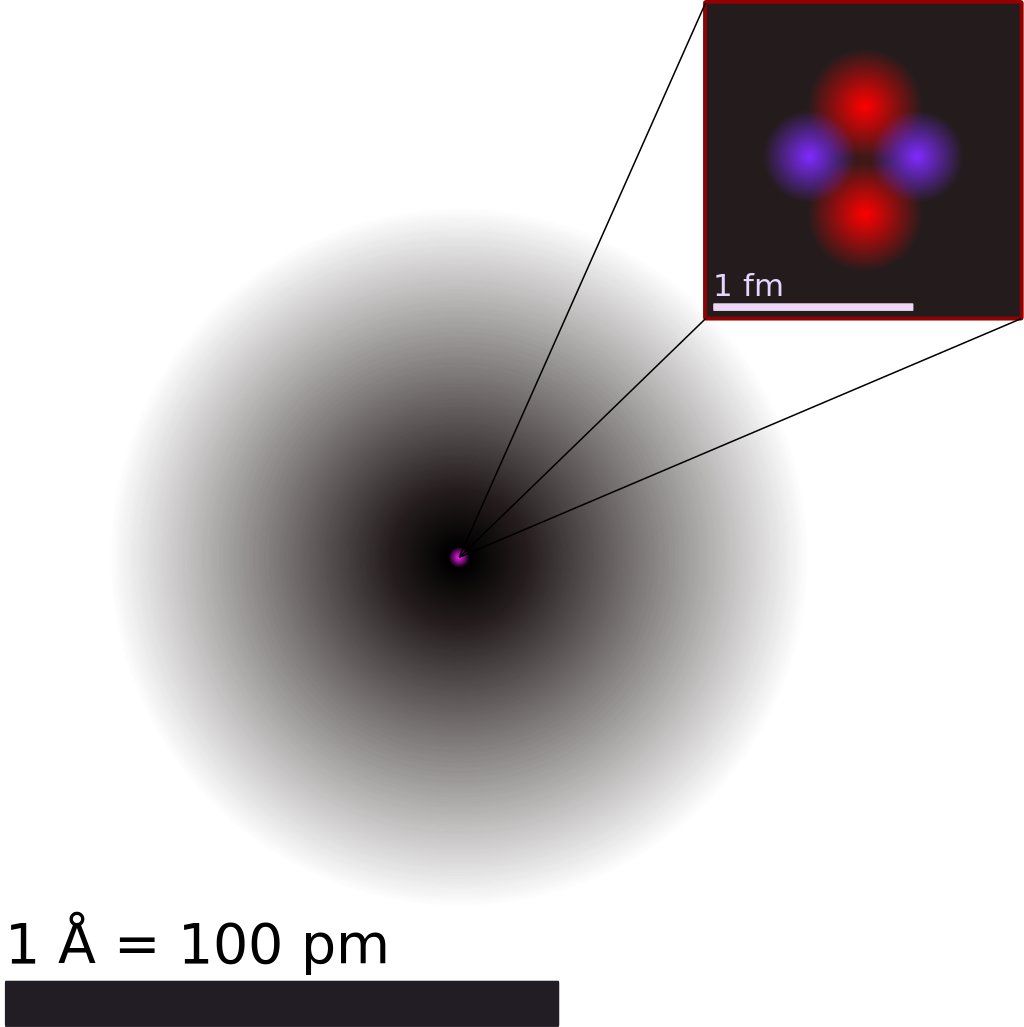
Diagram above shows a helium atom, and the different shades of grey represent the electron probability density. This is makes identifying the edge of an atom a problem since it does not have a sharp boundary. Therefore, there are several ways to define and measure the atomic radius:
The atomic radius of an atom increases down the group as an extra shell of electrons are added to each successive element. However, the atomic radius of an atom decreases across the period. This is because moving across the period, every consecutive element has an additional proton in it's nucleus, which exerts a greater pulling force (as the proton and electron are opposite charges) on it's electrons compared to the previous element, resulting in the electrons getting pulled closer to the nucleus thus decreasing the atomic radius.