Huygens-Fresnel principle
Huygens-Fresnel principle
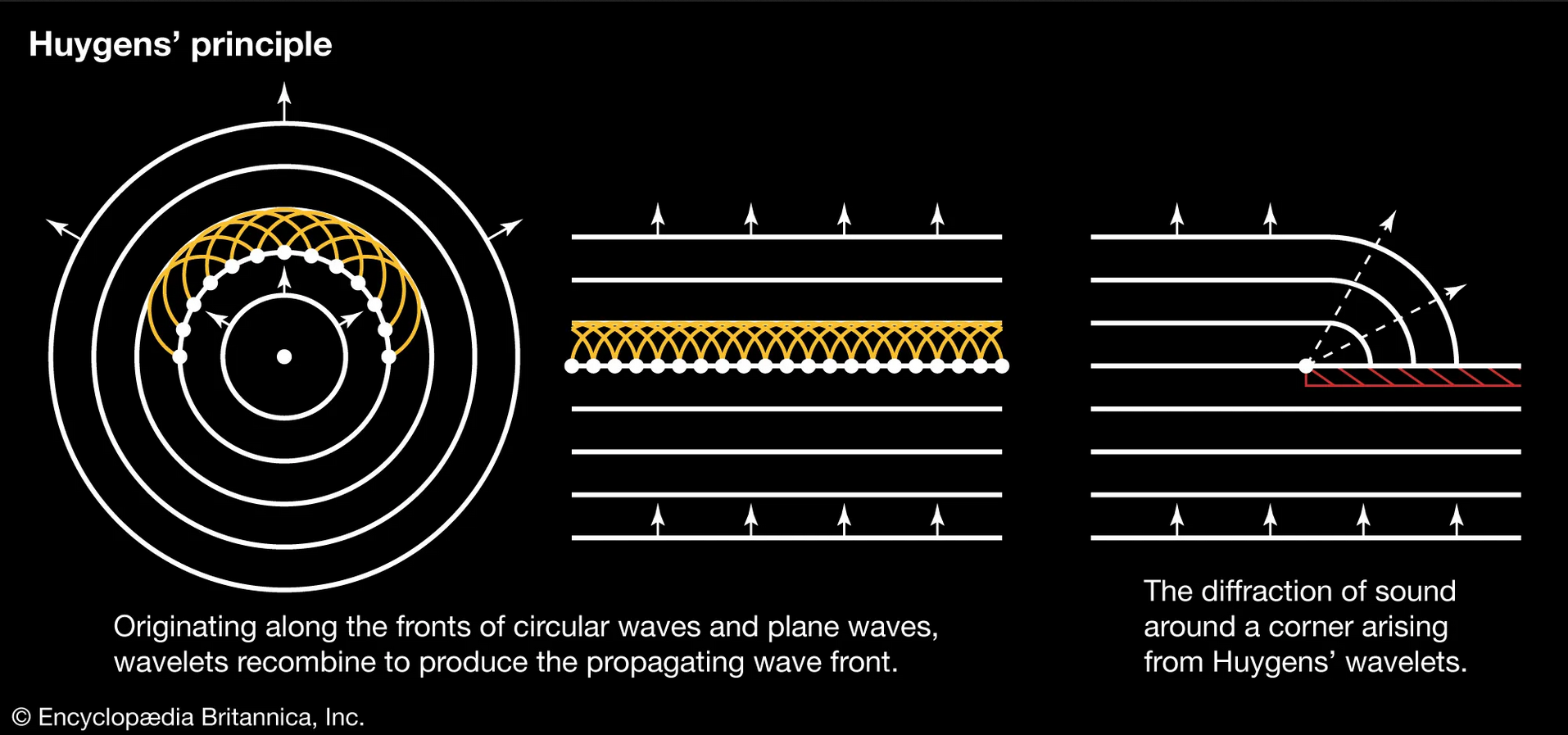
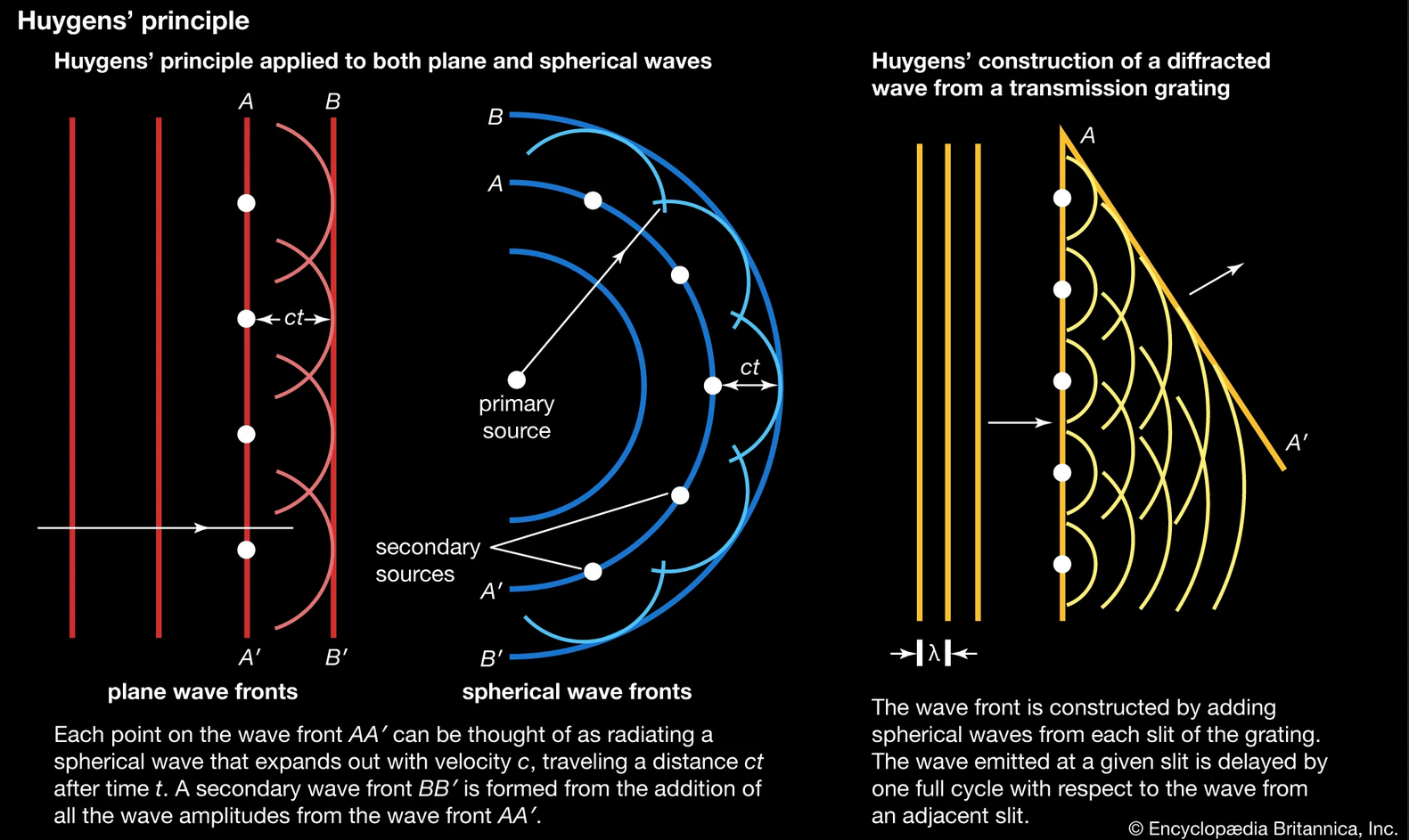
The Huygens-Fresnel principle (an improved version of Huygen's principle) states that every point on a wavefront is itself the source of spherical wavelets, and the secondary wavelets emanating from different points mutually interfere. The sum of these spherical wavelets forms a new wavefront.
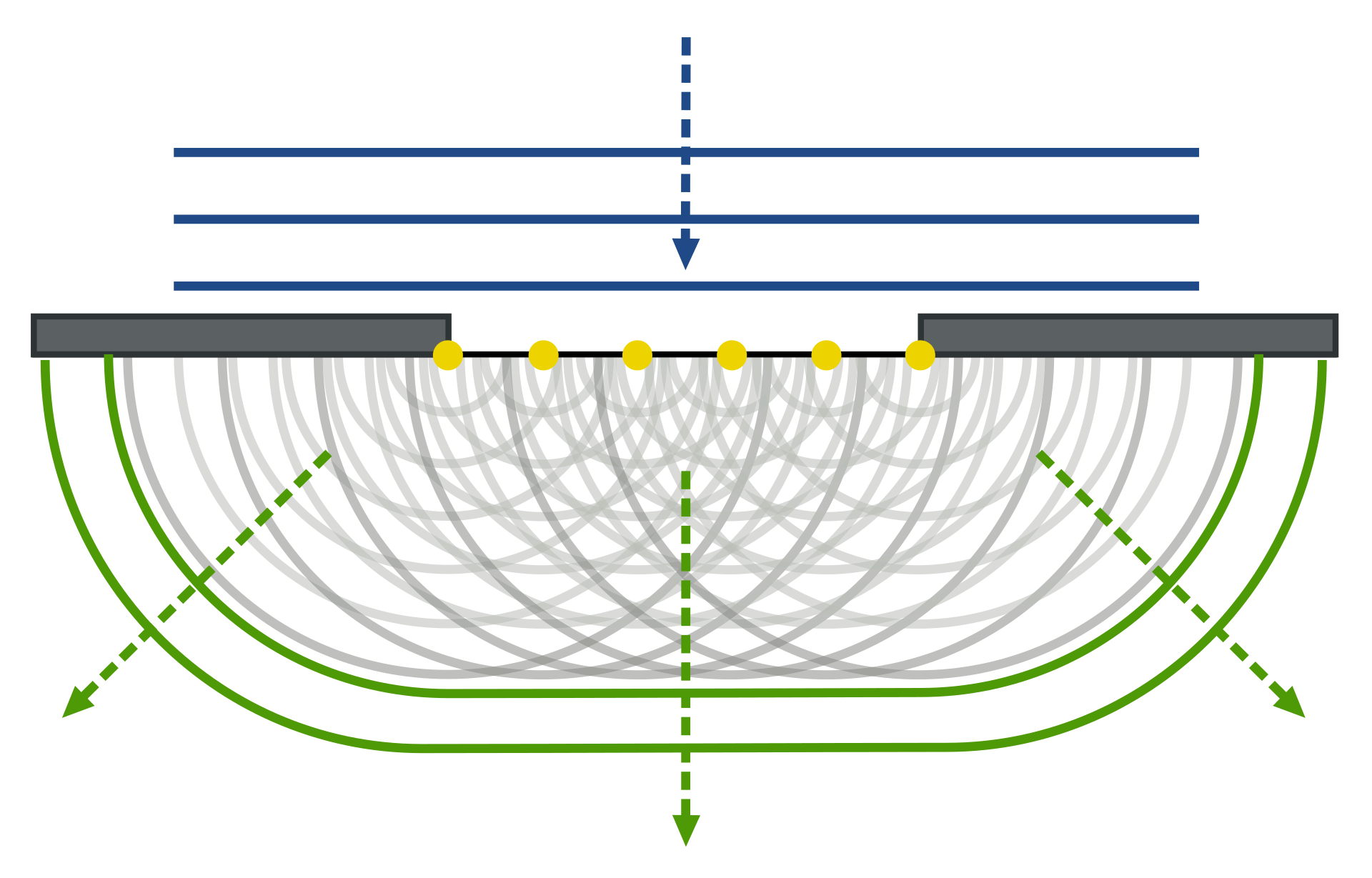
Huygen imagined that each point of a wavefront serves as a source of new waves, which he called secondary wavelets. These wavelets have the same frequency and speed as the original wave and are spherical waves. The envelop of these secondary wavelets make up the wavefront at a later time.
Huygens' principle suffers from several drawbacks. It does not tell us what to do with the backward traveling part of the secondary spherical wavelet. Furthermore, it makes use of only the envelop of the secondary wavelets, and does not tell us what to do with the rest of the wavelet. Most problematic part was that it gave rise to the same wavefront regardless of the value of the wavelength. This contradicted observation that diffraction patterns in the same setup depended on the wavelength.
Augustin Jean Fresnel used the ideas of interference to modify Huygens' principle so that one can understand the diffraction phenomena better. Fresnel hypothesized that every point of a primary wave could be thought of as producing secondary wavelet. But rather than their envelop, it was their overlap and interference that formed the primary wavefront later. The modified version is called the Huygens-Fresnel principle.